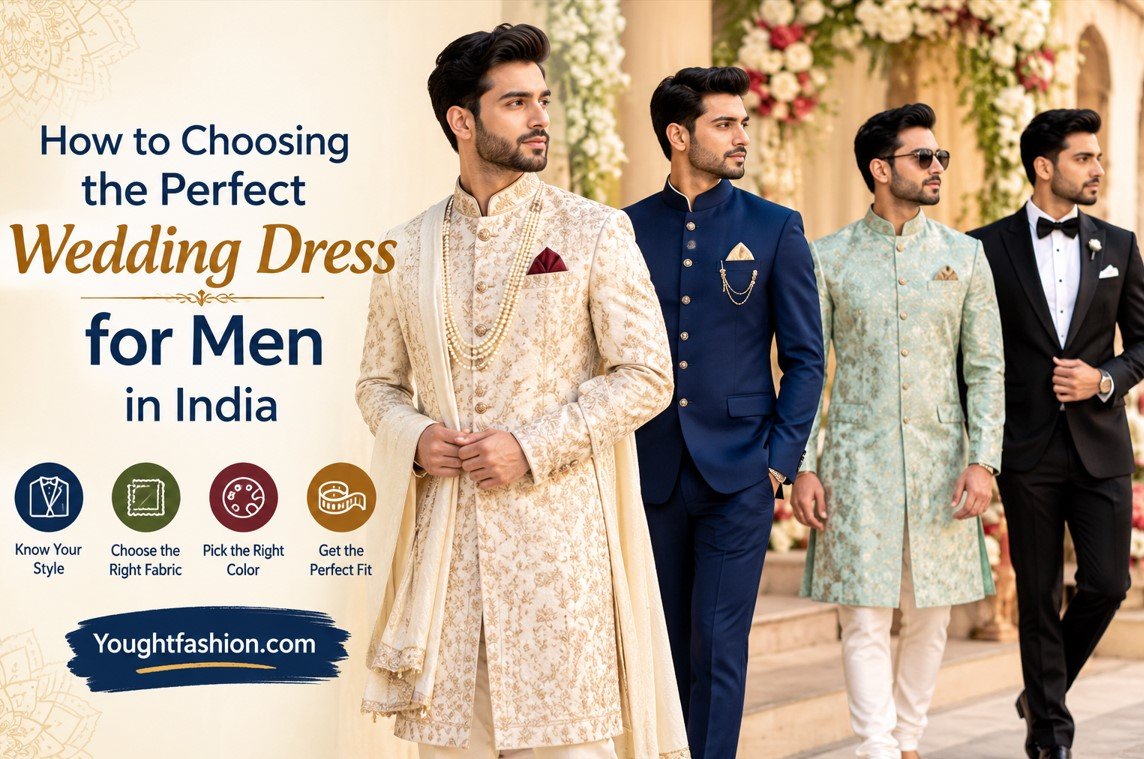
How to Choosing the Perfect Wedding Dress for Men in India
Gone are the days when Indian weddings were solely about the bride’s lehenga. Today, grooms are stepping into the spotlight with equal flair. Finding the right wedding dress for men requires careful thought, an understanding of body types, and a keen eye for fabrics. Indian weddings are grand, multi-day celebrations, meaning one outfit is simply not enough. You need a curated wedding wardrobe.
If you are a groom-to-be, this comprehensive guide will help you navigate the world of ethnic and contemporary menswear. We will break down every silhouette, decode fabric choices, and provide expert styling tips so you look your absolute best on your big day.
The Evolution of Indian Groomswear
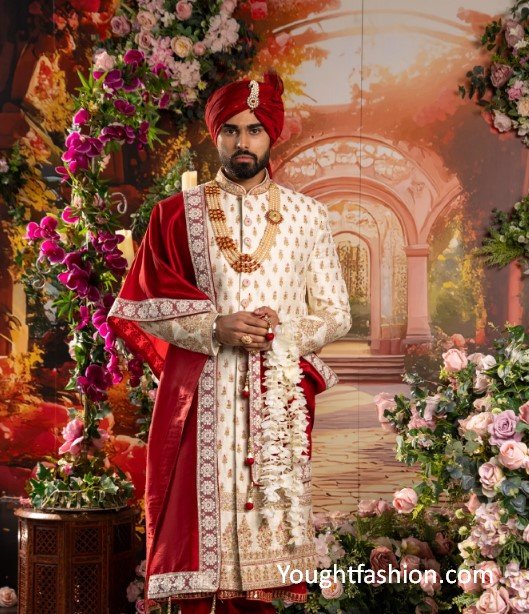
Historically, Indian men favored simple dhoti-kurtas or plain suits for their weddings. Comfort and tradition outweighed high fashion. However, as global exposure increased and Bollywood heavily influenced wedding aesthetics, groomswear transformed entirely.
Modern designers have merged rich Indian heritage with sharp Western tailoring. The result is a booming market for hybrid silhouettes. Today’s grooms experiment with asymmetrical hemlines, draped kurtas, pastel color palettes, and intricate floral embroideries. The modern wedding dress for men is about expressing individuality while respecting cultural roots.
Popular Types of Wedding Dresses for Men
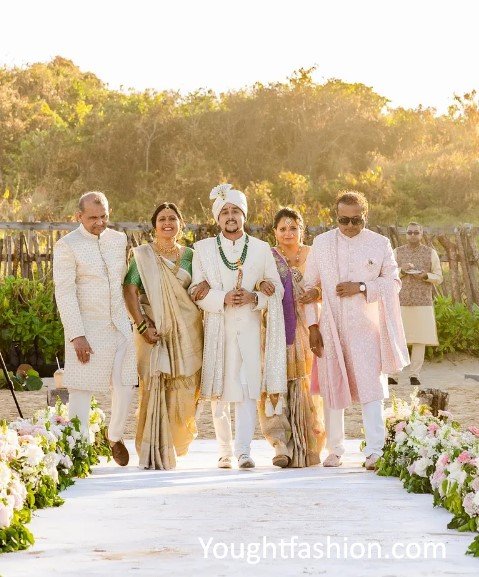
Understanding your options is the first step to building your wedding trousseau. Here are the most prominent styles dominating the Indian menswear market.
1. The Classic Sherwani
The sherwani remains the undisputed king of Indian groomswear. It is a long coat-like garment worn over a kurta and paired with a churidar (fitted trousers).
- Best For: The main wedding ceremony.
- Key Details: Look for intricate Zardozi, Dabka, or thread-work embroidery.
- Styling Tip: Pair a heavily embroidered sherwani with a contrasting plain stole (dupatta) to balance the visual weight.
2. The Royal Jodhpuri Suit (Bandhgala)
Originating from the royal courts of Rajasthan, the Jodhpuri suit features a closed-neck jacket (Bandhgala) worn with trousers. It offers a structured, highly masculine silhouette.
- Best For: Receptions and engagement parties.
- Key Details: Focus on the fit of the shoulders and the quality of the buttons (often metallic or jeweled).
- Styling Tip: Velvet Jodhpuris in deep jewel tones like emerald green or midnight blue look exceptionally regal for evening events.
3. Indo-Western Suits
For grooms who want the best of both worlds, Indo-Western outfits combine ethnic fabrics and embroideries with Western cuts. This includes cowl-draped kurtas under structured jackets or asymmetrical achkans.
- Best For: Sangeet and cocktail nights.
- Key Details: These outfits rely heavily on unique drapes and contemporary layering.
- Styling Tip: Ditch the traditional churidar for tailored ankle-length trousers or even dhoti pants to enhance the fusion look.
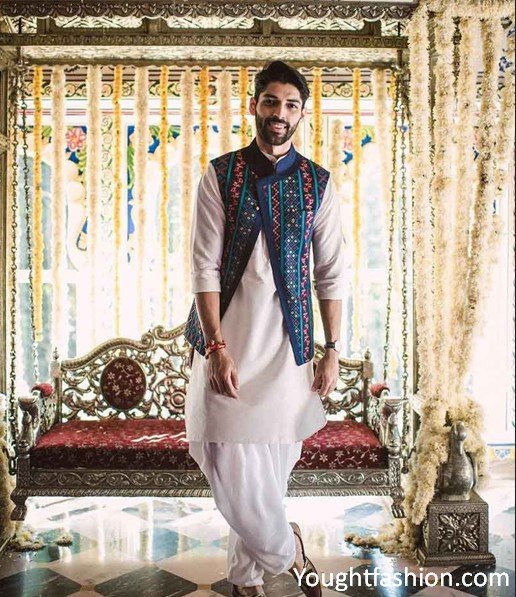
4. Kurta Pajama with Nehru Jacket
This is a versatile, lightweight option. A tailored kurta pajama elevated by a contrasting or embroidered Nehru jacket (sleeveless jacket) creates a smart-casual ethnic look.
- Best For: Haldi, Mehendi, or smaller pre-wedding pujas.
- Key Details: Play with bold colors and floral prints on the jacket while keeping the base kurta neutral.
- Styling Tip: Roll up the sleeves of the kurta slightly for a relaxed, approachable vibe during daytime events.
5. The Traditional Dhoti Kurta
In many South Indian and Bengali weddings, the dhoti kurta is a mandatory cultural requirement. It consists of a long unstitched cloth tied around the waist and legs, paired with a classic shirt or kurta.
- Best For: Traditional morning weddings.
- Key Details: Silk dhotis with gold borders (Kasavu in Kerala or Veshti in Tamil Nadu) offer unmatched elegance.
- Styling Tip: Ensure the dhoti is pre-stitched if you are not accustomed to tying and managing a traditional one.
6. The Western Tuxedo
While traditional attire dominates the actual wedding, the classic tuxedo has become a staple for post-wedding celebrations.
- Best For: The grand reception or cocktail party.
- Key Details: A tailored fit, a crisp white shirt, a bow tie, and a silk lapel.
- Styling Tip: Opt for a double-breasted tuxedo or a textured velvet smoking jacket to stand out from the guests.
Decoding Groom’s Attire by Wedding Ceremony
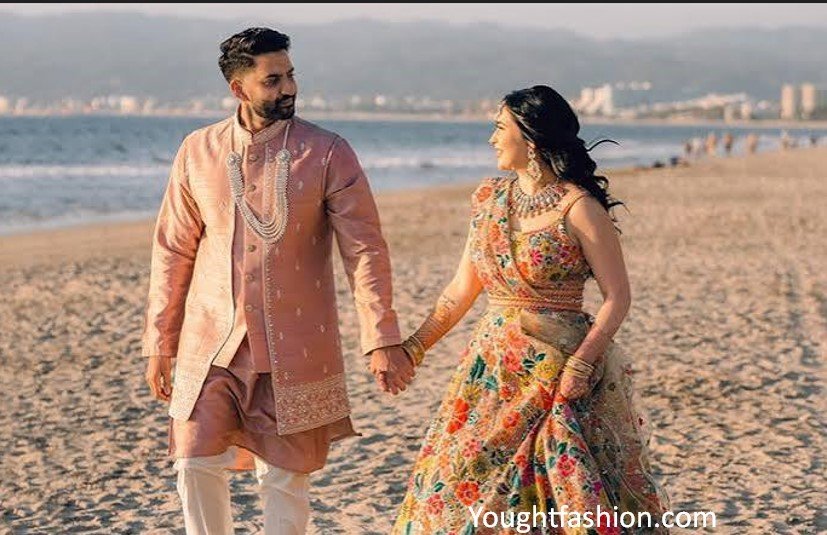
An Indian wedding is a marathon of events. You need specific outfits tailored to the mood, time, and significance of each function.
The Roka / Engagement
This is the formal announcement of the wedding. The vibe is elegant but not overly heavy.
- What to wear: A smart linen or silk Bandhgala or a sharp three-piece suit.
- Colors: Navy blue, charcoal grey, or soft peach.
The Haldi Ceremony
This daytime event is messy, fun, and involves turmeric paste. Comfort and washability are key.
- What to wear: A simple cotton or linen kurta pajama.
- Colors: Yellow, mustard, ivory, or vibrant orange.
The Mehendi & Sangeet
These events are all about dancing and celebration. You need flexibility and high fashion.
- What to wear: An Indo-Western set with draped pants, or a heavily mirrored kurta with a printed jacket.
- Colors: Mint green, blush pink, floral prints, or striking royal blue.
The Wedding Day (Pheras)
This is the main event. Your outfit must exude royalty and complement the bride’s attire.
- What to wear: A traditional Sherwani or regional specific attire (like a silk Dhoti).
- Colors: Ivory, gold, classic maroon, or soft pastels like pistachio and blush.
The Reception
The reception is a formal wrap-up to the festivities. It is your time to look sharp and sophisticated.
- What to wear: A tailored Tuxedo or a dark velvet Jodhpuri suit.
- Colors: Black, midnight blue, wine red, or emerald.
Fabric Guide: Choosing the Right Material for the Season
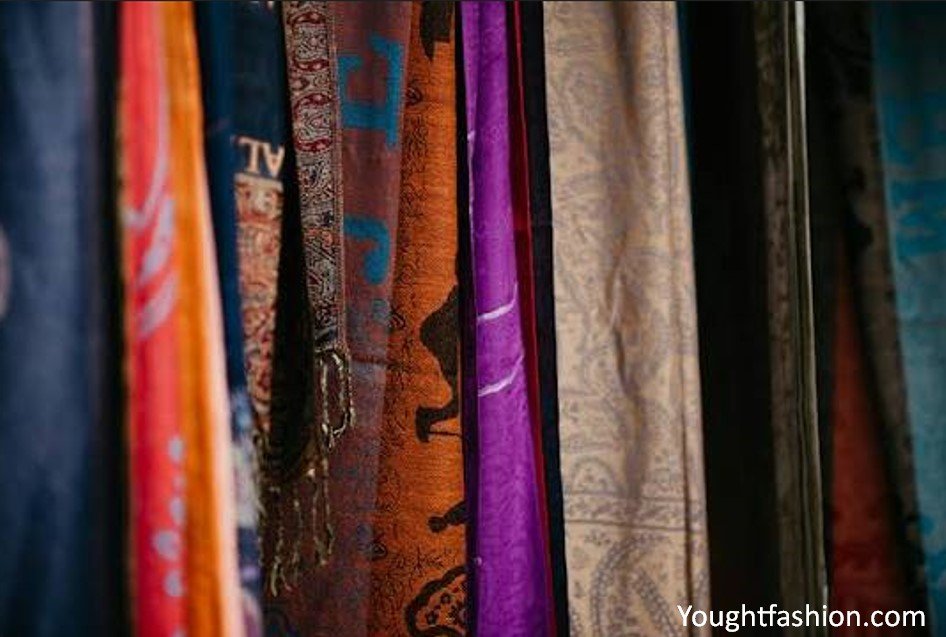
Your chosen fabric dictates how your outfit falls, feels, and photographs. More importantly, it dictates your comfort level based on the season.
Winter Weddings (November to February)
- Velvet: Rich, heavy, and luxurious. Velvet absorbs light beautifully, making it perfect for evening receptions. It traps heat, keeping you warm during chilly outdoor events.
- Brocade & Jacquard: These woven fabrics feature raised patterns (often in gold or silver thread). They are inherently stiff, providing a highly structured, royal look for sherwanis.
- Raw Silk: Thicker than regular silk with a slightly nubby texture. It holds heavy embroidery perfectly without sagging.
Summer Weddings (April to August)
- Linen: Highly breathable and lightweight. Ideal for Haldi and daytime events. However, linen wrinkles easily, so avoid it for the main Pheras.
- Cotton Silk: Blends the breathability of cotton with the subtle sheen of silk. This is the perfect compromise for a summer groom who wants to look festive but stay cool.
- Georgette: Flowy and lightweight. Designers are increasingly using embroidered georgette for Indo-Western draped kurtas because it moves beautifully during Sangeet dances.
Color Trends for the Modern Indian Groom
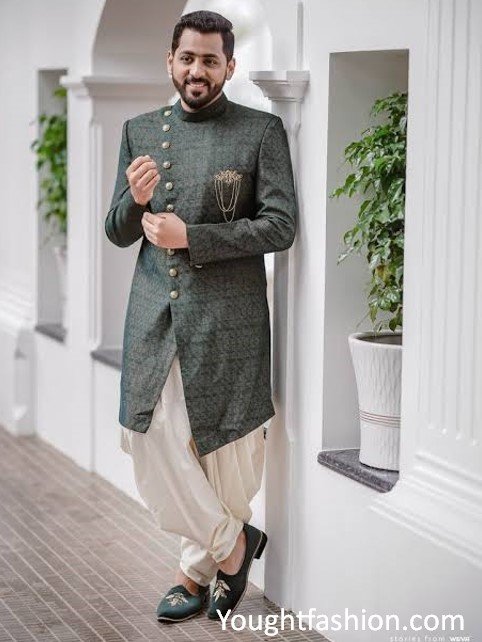
Coordinating with the bride is standard practice, but matching exactly is outdated. The modern approach is to complement rather than match.
- The Pastel Revolution: Ivory, blush pink, mint green, and powder blue have replaced the traditional bright reds and golds for daytime weddings. Pastels look incredible in natural sunlight and offer a serene, elegant aesthetic.
- Earthy Tones: Olive green, rust orange, and warm mustard are highly popular for pre-wedding festivities like the Mehendi.
- Jewel Tones for the Evening: Sapphire blue, ruby red, and emerald green are the ultimate choices for Jodhpuris and tuxedos at evening receptions. They exude luxury and contrast beautifully against night lighting.
- Classic Ivory and Gold: When in doubt, ivory remains the most timeless choice for an Indian groom. Paired with subtle gold embroidery, it suits every skin tone and photographs immaculately.
Essential Accessories to Complete the Look
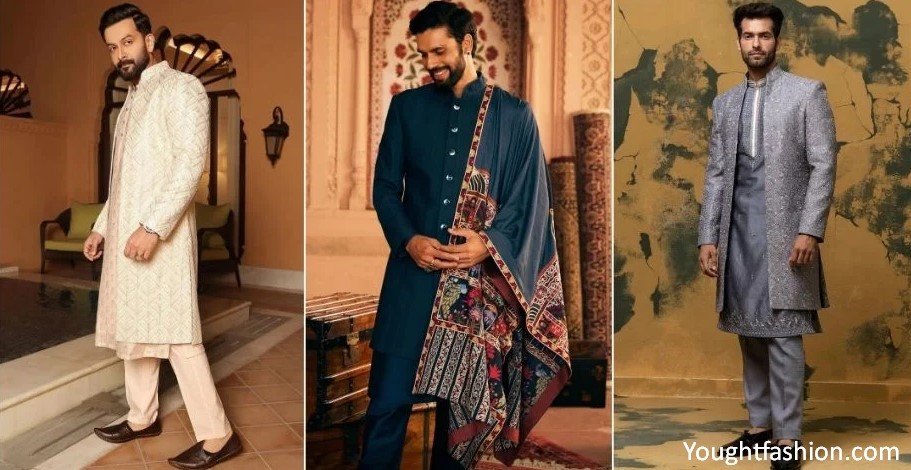
A great wedding dress for men is incomplete without the right accessories. These elements tie the whole look together.
1. Safa (Turban)
The turban is the crown of the Indian groom. Choose a fabric that contrasts your sherwani. If your outfit is heavy, opt for a light, floral-printed or pastel Chanderi safa.
2. Kalgi (Turban Brooch)
Pinned to the front of the safa, the Kalgi adds a touch of royalty. It usually features feathers, pearls, or precious stones.
3. Mala (Layered Necklace)
A multi-tiered pearl, emerald, or kundan necklace worn over the sherwani breaks up the heavy embroidery and draws the eye upward to the face.
4. Footwear (Mojaris & Juttis)
Ditch the standard dress shoes for the wedding ceremony. Mojaris or Juttis made from embroidered silk or leather complete the ethnic look. Ensure you break them in a week before the wedding to avoid blisters.
5. Stole (Dupatta)
A velvet or silk stole draped over one shoulder adds regal volume to a sherwani. Pin it securely so you don’t have to adjust it during the rituals.
Comparison Table: Traditional vs. Contemporary Groomswear
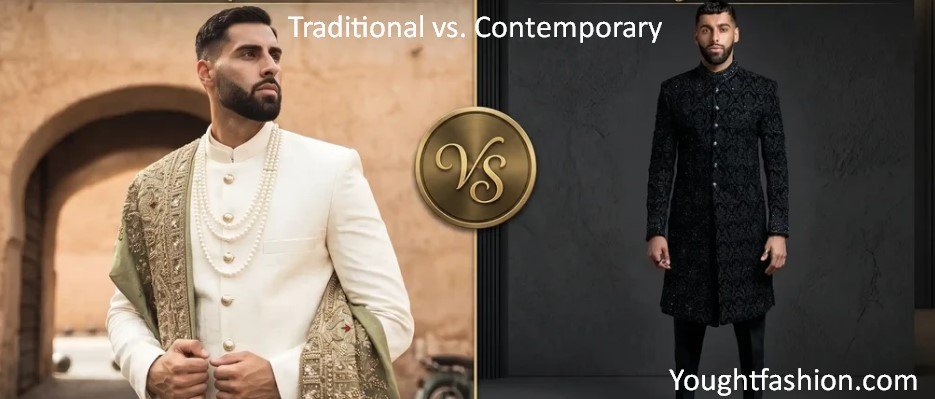
| Feature | Traditional Groomswear (e.g., Sherwani) | Contemporary Groomswear (e.g., Indo-Western) |
| Best Suited For | Main Wedding Ceremony (Pheras) | Sangeet, Cocktail, Mehendi |
| Silhouette | Structured, rigid, straight cuts | Fluid, draped, asymmetrical |
| Footwear Pairing | Embroidered Mojaris / Juttis | Loafers, Mules, Oxfords |
| Embroidery Style | Heavy Zardozi, traditional motifs | Geometric patterns, minimal threadwork |
| Mobility | Restricted due to heavy fabrics | High mobility, ideal for dancing |
Pros & Cons of Custom-Made vs. Ready-to-Wear
When shopping for your wedding, you will face a crucial choice: buying off-the-rack or getting a bespoke outfit stitched from scratch.
Custom-Made (Bespoke)
Pros:
- Flawless Fit: Tailored perfectly to your unique body measurements.
- Total Personalization: You choose the fabric, embroidery, buttons, and cut.
- Matching Made Easy: You can incorporate the exact fabric or motif from the bride’s lehenga.
Cons:
- Time-Consuming: Requires multiple fittings and takes 4 to 8 weeks.
- Higher Cost: Bespoke tailoring from premium designers carries a significant markup.
Ready-to-Wear (Off-the-Rack)
Pros:
- Instant Gratification: You see exactly what you are getting immediately.
- Budget-Friendly: Generally more affordable, with options across all price points.
- Convenience: Perfect for last-minute shoppers.
Cons:
- Compromised Fit: Standard sizing may require alterations for a sharp look.
- Common Designs: You risk wearing a design that hundreds of others have bought.
Expert Styling Tips for Grooms
Your body type should dictate the silhouette of your wedding outfit. Here is how to use clothing to enhance your natural build.
For Tall and Slim Grooms:
- You carry long Sherwanis exceptionally well.
- Opt for heavy fabrics like brocade or velvet to add visual bulk to your frame.
- Wear a contrasting dupatta draped across the chest to break up your vertical height.
For Short Grooms:
- Avoid highly contrasting top and bottom colors; a monochromatic look creates a continuous vertical line, making you appear taller.
- Ensure your sherwani ends just above the knee. A sherwani that falls to the mid-calf will make your legs look shorter.
- Choose smaller, subtle embroidery motifs rather than large, overwhelming patterns.
For Broad or Muscular Grooms:
- Opt for structured Bandhgalas that highlight broad shoulders but taper at the waist.
- Avoid stiff fabrics like raw silk that add unnecessary bulk. Instead, choose fabrics that drape well, like high-quality wool blends or georgette.
- Keep the embroidery minimal around the chest and stomach areas.
Frequently Asked Questions (FAQs)
1. How long before the wedding should I buy my groomswear?
You should finalize your wedding outfits at least 2 to 3 months in advance. This allows ample time for custom tailoring, multiple fittings, and sourcing matching accessories without last-minute panic.
2. Should my outfit exactly match the bride’s lehenga?
No. Exact matching often looks overwhelming in photographs. Instead, opt for color coordination. If the bride wears red, wear an ivory sherwani with a red pocket square or a red floral safa.
3. How much does a decent sherwani cost in India?
Prices vary wildly. A good quality ready-to-wear sherwani from a retail brand costs between ₹15,000 and ₹40,000. Designer or bespoke sherwanis can range from ₹80,000 to over ₹3,000,000.
4. Can I wear a tuxedo to a traditional Indian wedding?
A tuxedo is generally inappropriate for the religious ceremonies (Pheras/Nikaah). However, it is the perfect choice for an evening reception or a cocktail party.
5. What is the most comfortable fabric for a summer groom?
Cotton-silk blends and pure linen are your best choices. They allow the skin to breathe and prevent excessive sweating during long rituals performed near the holy fire (Havan).
6. Are floral prints appropriate for grooms?
Absolutely. Floral printed kurtas and Nehru jackets are incredibly popular for daytime events like the Haldi and Mehendi. They offer a vibrant, festive, and relaxed vibe.
7. How do I make my off-the-rack suit look expensive?
The secret is in the fit. Buy a ready-to-wear suit that fits your shoulders perfectly, and pay a skilled local tailor to adjust the waist, sleeves, and trouser length. Upgrading plastic buttons to brass or metallic ones also instantly elevates the garment.
8. Do I really need to wear a necklace (Mala)?
While not mandatory, a layered pearl or kundan mala adds a royal dimension to an otherwise plain sherwani. It fills the empty space on the chest and balances the heaviness of the turban.
9. What kind of socks should I wear with Mojaris?
Do not wear visible western dress socks. Use low-cut, “no-show” loafer socks made of cotton. This protects your feet from blisters while maintaining the traditional aesthetic of the footwear.
10. Can I reuse my wedding sherwani?
It is difficult to wear a heavily embroidered wedding sherwani to another event without upstaging the host. However, you can repurpose it by wearing the jacket over a plain kurta, or altering it into a shorter jacket for future festive occasions.
Conclusion
Finding the ideal wedding dress for men requires balancing tradition, modern fashion, and personal comfort. Remember that your wedding is a once-in-a-lifetime event, and your attire should reflect the joy and gravity of the occasion.
Start your shopping journey early, understand your body type, and do not underestimate the power of expert tailoring. Whether you choose a heavily embroidered classic sherwani, a regal Jodhpuri suit, or a sharp contemporary tuxedo, confidence is the ultimate accessory. Focus on high-quality fabrics, cohesive color palettes that complement your partner, and comfortable footwear. When you feel good in what you are wearing, it radiates in your posture, your smile, and your wedding photographs.